
Starting a clothing line can be a very rewarding experience for a creative entrepreneur with a vision. Whether you’re looking to create a simple line of printed apparel or you want to create an entire cut and sew collection featuring various pieces and seasonal additions, this post will show you how to start a clothing line.
Depending on what kind of clothing line you want to create, there are likely going to be many different steps involved in the process. The more involved you want to be in the sourcing and production of your line, the more time, effort, and money you’ll have to invest. If you’re just interested in starting something quick and easy, there are options for that too. In this post, we’re going to show you step-by-step how you can start your own clothing line whether you have a budget of $100, or if you have more than $10,000 to invest.
If you’ve ever been thinking about starting a clothing brand, look no further. This post has been in the works for nearly a year and along the way, we’ve included the knowledge and experience of dozens of entrepreneurs and companies from the clothing industry. This industry knowledge ranges from:
- A small brand that managed to launch a successful crowdfunding campaign that raised $300,000 which they put towards manufacturing their high-end merino wool clothing line
- A private label wholesaler of blank apparel who targets the B2B market
- A pattern maker and tech pack designer who works with aspiring clothing line creators to help bring their visions to life
- And finally, we’ve gone right to the source to get insight from a factory that dyes yarn and weaves textiles
There’s a lot involved when it comes to starting your own clothing line, so let’s jump into it.
How to Start a Clothing Line: Table of Contents
-
- Deciding on Clothing Products You Want To Sell
- Choosing a Clothing Line Business Model
- The Elements of A Successful Clothing Brand
- Differentiating Your Clothing Line
- Developing a Business Plan for Your Clothing Line
- Crafting a Brand for Your Clothing Line
- The Product Development Process for Your Clothing Line
- Design Your Clothing Line Concepts
- Create Patterns & Develop Tech Packs
- Research Clothing Manufacturers
- Determine Your Budget
- Select Clothing Manufacturers
- Contact Clothing Manufacturers
- Screen Potential Factories
- Get Samples Made
- Start Full-Scale Production
- Brand Your Clothing & Packaging
- Branded Packaging Options
- Brand Your Clothing Items
- Create Your Online Clothing Store
- Create a Shipping Strategy for Your Clothing Company
Key Takeaways & FAQs for How to Start a Clothing Line
How do I start my own clothing line?
Starting a clothing line can be as simple or complex as you want it to be. To keep it simple, source clothing products from a dropshipping supplier. For more options, source clothing products from a wholesale supplier. For complete and total input and control over your clothing brand, work with a clothing manufacturer.
Do I need a business license to start a clothing line?
Probably! This might vary depending on your country or region, but most businesses need a business license in order to operate. For accurate business license information, consult the business license regulatory body in your country and/or region.
If you’re in the United States, check out the US Small Business Association, in Canada the Canadian Government Website, in the UK the UK Government Website, and in Australia the ABLIS.
Do I Need Copyrights, Trademarks, or NDAs for my Clothing Brand?
It depends. For most clothing brands, the answer might be no, but it’s worth contacting a legal professional for qualified advice. Conduct your own due diligence when it comes to legal matters.
For many new clothing brands, copyrighting or trademarking might not be worthwhile. Why? The short answer is that you automatically own any copyrights to designs you’ve created without having to officially register that copyright, and trademarks are expensive, time-consuming, and don’t give you benefits in all jurisdictions.
Plus, when you register a trademark you may have the obligation to defend that trademark, so you’ll have the responsibility to hold people/businesses accountable if they infringe on your trademark which can lead to taking legal action (aka, more time and money) in the future.
While there can be benefits and advantages to registering copyrights and trademarks, there can also be a lot of time, money, and headaches involved which may not be worthwhile when you’re first starting out. However, take your own circumstances into account and do what you feel is best for your clothing line.
Non-disclosure agreements (NDAs) might be useful to protect your bespoke clothing designs when working with pattern makers and/or manufacturers. It’s best to consult a legal professional for guidance that suits your circumstances.
Check out these online resources for legal advice:
- Lawtrades (USA)
- Clarity (Worldwide)
- Ownr (Canada)
- Rocket Lawyer (USA, UK, Spain, France, The Netherlands)
What does it cost to start a clothing line?
It depends. If you work with a dropshipping supplier to create your clothing pieces and handle the shipping and fulfillment process, it can probably cost you between $100-$500 to launch a clothing brand. But if you want complete brand control and to design your clothing pieces from scratch, it can cost tens of thousands of dollars or more. It depends on the scale you want your clothing business to operate on!
How to start a clothing line for free
To start a clothing line for free, source your clothing pieces from a dropshipping supplier. A dropshipper makes the clothing products, they can print logos, patterns, or images on the garments, and they also handle the shipping process. When you work with a clothing dropshipper, you also don’t have to purchase any inventory upfront, so you can launch with little-to-no financial capital.
To learn about this process, jump to the Print-on-Demand Clothing Line section.
How to start a clothing line with no experience
You can definitely start a clothing line with no experience. We would recommend starting your clothing line by dropshipping, which takes a lot of the responsibilities off your plate so you won’t be too overwhelmed.
Check out the Print-on-Demand Clothing Line to learn more.
How to find a clothing manufacturer
There are many different clothing manufacturers out there! Check out our Clothing Manufacturers Directory to find clothing manufacturers based primarily in North America.
How to design your own clothing
To learn how to design your own clothing, take a class in your local area or find classes online! You can find courses on Skillshare or even YouTube!
How to start a luxury clothing brand
To start a luxury clothing brand, you’ll want to focus on quality and bespoke designs, so find a clothing manufacturer who values those things, too. Work closely with a clothing atelier that constructs garments with care and attention to detail, focusing on getting the right fit for each garment, and making the pieces out of high-quality materials. Search for clothing ateliers in your local area, or find clothing manufacturers abroad who specialize in the kind of garments you want to create.
How to start a clothing business with buying wholesale
Starting a clothing business by buying wholesale clothing garments is an approachable way to start a clothing line. When you do this, you don’t have to design clothing pieces from scratch so you can keep up with changing trends much more easily. Check out the section on Wholesale/Private Label Clothing Line to learn more.
How to start a clothing boutique
Most clothing boutiques curate clothing pieces from multiple different brands, so to start your own clothing boutique either online or in-person, you’ll want to source your items from different brands or designers.
This means you’ll be sourcing clothing products from multiple different wholesale clothing suppliers, so you’ll have to go through their product offerings with a discerning eye and curate the items that best fit your boutique’s niche market. To get started with the wholesale clothing sourcing process, check out the Wholesale/Private Label Clothing Line section.
How to start a fashion business from home
It’s totally possible to start a fashion business from home. Check out the rest of this article to learn how!
Deciding on Clothing Products You Want to Sell

You have a lot of choices when it comes to creating apparel and fashion products.
If you’ve always wanted to start a clothing line, you likely already have a good idea of the particular products you want to create and sell. For others, creating a clothing brand may represent a unique and interesting opportunity to design a product that represents your personal style—but you may be unsure of which products to sell.
Regardless of which category you fall into, it’s important to carefully consider all clothing and apparel options before deciding to move forward on one of them.
Some clothing and apparel products you may want to consider for your brand are:
- Short-Sleeve Shirts
- Long Sleeve Shirts
- Hoodies
- Pants/Leggings
- Dresses
- Lingerie/Underwear/Socks
Each of these clothing products presents their own opportunities and challenges when it comes to building a clothing brand around them, so it’s important to consider them carefully. Keep this in mind as you continue through this article.
Below, we will look into some of the most common clothing line business models to get a better sense of the work, time, and monetary investment required for each.
Choosing a Clothing Line Business Model
If you’re ready to start your clothing brand, you’ll have some important choices to make at this point.
There are several directions you can take to create your own brand which are all pretty different from one another. And most importantly, the difficultly, costs, and time input vary dramatically between each option.
Let’s take a look at the most common options:
- Print-on-Demand
- Private Label Clothing Line
- Custom Cut & Sew Clothing Line
Let’s dig into the advantages and disadvantages of each one below.
| Type | Difficulty | Cost | Time Input |
|---|---|---|---|
| 1. Print-on-Demand | Very Low | $ | Very Low |
| 2. Wholesale/Private Label |
Low | $$ | Medium |
| 3. Custom Cut & Sew Clothing Line | High | $$$$ | Very High |
Option #1: Print-on-Demand Clothing Line

The first and easiest option for starting your own clothing line involves printing your designs or logo on standard blank apparel.
This is an attractive option for people with a low budget (less than $1,000) and those wanting to benefit from being able to set up a nearly fully-automated business. The biggest drawback of this type of business model is the lower profit margins and the lack of ability to differentiate your product on things like material, stitching, and fit since you’re using standard wholesale clothing.
The print-on-demand or direct-to-garment printing process uses a special digital ink-jet printer to print ink directly onto clothing and apparel. These digital printers are able to produce full-color images on clothing items with extreme accuracy.
Print-on-demand printing produces high-quality printed apparel quickly and efficiently. Because of this, there are no setup costs, unlike screen printing. This means that it’s easy and cost-effective to print small orders (including just 1 unit).
Pros
- No set-up costs
- High-quality prints
- Unlimited color options
- Perfect for low order quantities or one-offs
- Many clothing options (shirts, leggings, socks, dresses, etc.)
Cons
- Not cost-effective for large production runs
- Generally no volume discounts
- Limited print product selection
- Limited finishing options (tags, labels, etc)
Timeline: Days
Costs: $0-$500
Time & Energy Input: Very Low
Other Notes: To start a print-on-demand clothing brand, we recommend using Printful and Shopify. When utilizing a clothing and apparel printing company like Printful (which seamlessly integrates with Shopify stores), you can be up and running in a matter of hours for under $50. Once you receive an order for your online store, Printful will also receive the order automatically and begin the printing process and ship it to your customer on your behalf. Read more about this process and learn how to set up a business like this step-by-step in our how to start a t-shirt business in under 24 hours article. To find more print-on-demand clothing suppliers, check out our Dropshipping Suppliers Directory.
Option #2: Wholesale/Private Label Clothing Line
When sourcing clothing products through wholesale or private label suppliers, you are essentially purchasing clothing products from other brands and then selling them to customers from your own store. When you source clothing products this way, you’ll purchase pieces in bulk from a supplier at a discounted price, and then sell the items to your customers at a markup.
With this option, you won’t be manufacturing your own clothing items from scratch, but you’ll be curating a selection of pieces that suit your customers’ tastes. You won’t be able to customize each clothing piece like you would if you were manufacturing clothing items, but you also don’t have to go through the lengthy and expensive process of having your own clothing items manufactured. The main disadvantage with this option, however, is that you have to purchase many stock-keeping units (SKUs) of clothing items in bulk and upfront, which means you’ll need cash flow.
Pros
- Don’t need to manufacture your own items
- Can keep up with changing trends more easily
- Get to curate your own range of products
- Volume discounts
- Potential for good profit margins
- You can brand items with your own hangtags, packaging, etc.
- When working with a private label supplier, you will be able to customize the clothing tags with your own brand name
Cons
- When working with a wholesaler, you won’t be able to customize the clothing tags with your brand name
- Usually, minimum order quantities start at (at least) 10 units per color/size, if not 100 or 1,000 units
- You’ll have to manage inventory and shipping yourself
- You’ll need cash flow to purchase many products upfront
Timeline: Weeks
Costs: $2,500+
Time & Energy Input: Medium
Other Notes: We recommend checking out our Wholesale Suppliers Directory and Private Label Suppliers Directory to find suppliers for your clothing brand!
Option #3: Custom Cut & Sew Clothing Line

Custom cut and sew clothing means you’re doing everything. We’re talking about designing sketches, turning them into patterns, sourcing fabrics and manufacturers, and paying for a full production run (which could be thousands of units).
Making your own clothing isn’t for the faint of heart. It can be an intensive process that can take months (at minimum) to get up and running. You’ll need to find a manufacturer, you’ll need to work with a pattern maker, you’ll have to create tach packs, you’ll have to source and test fabric, and you’ll also likely have to create and test many samples before you even come close to a finished product.
Depending on the exact clothing items you’re looking to produce, just to get a few samples as finished products can cost thousands.
Once you have a finished product, you’ll also need to produce a full run with your manufacturer, you’ll need to stock your inventory, and even develop a shipping strategy to get your clothes to your customers.
Pros
- You’ll get a 100% custom product
- Potential for increased perceived value from customers
- Potential for increased margins
- You’ll be 100% in control of branding
Cons
- Very high startup costs
- It’s a complex process involving several moving parts
- It can take months or more to launch
Timeline: 3 months – 1+ years
Costs: $10,000+
Time & Energy Input: Very High
Other Notes: The second part of this post will focus on all the steps and resources involved in developing your own cut and sew clothing line so read on!
The Elements of a Successful Clothing Brand
Great clothing brands are great for a reason. Usually, they do one thing very well, and sometimes they do multiple things really well. Before starting your own clothing line, there are four important factors to a successful brand that you’ll want to consider:
- Niche
- Design
- Quality
- Brand
Let’s dive into each one of these elements a little more below:
Selecting a Clothing Brand Niche
Selecting a specific niche is important—and many times, vital—for success in the clothing and apparel industry. Blindly trying to target large groups of people will leave you with a brand that speaks to no one.
Focusing on a specific group of people has several major benefits:
- It’s easier to market (since you can hone in on your target market more specifically)
- It can be more affordable (since you aren’t targeting the wrong audiences)
- There’s potential for less competition (the more you niche down, the smaller your competitive pool gets)
- You can attract greater customer loyalty (because your audience knows that you’re focused on them)
For example: “Clothing with funny slogans” or “hoodies for men” are both too broad to attack since the markets are very developed. Niching down will help you better target your market, allow you to reach them more easily, and be able to create more value for them. So instead of “clothing with funny slogans” you might cater to a specific and passionate market like “clothing with slogans for nurses or firefighters.” Or, instead of “hoodies for men” you could focus on manufacturing ultra-thick/warm hoodies for people in cold climates.
Clothing Designs
Your designs—whether they’re printed, embroidered, or the design of the actual garment itself—are critical. Not only do your clothing pieces need to look great, but they also need to look great specifically in the eyes of your target market.
Ultimately, you’ll be the one who loses if your clothing designs aren’t aesthetically pleasing and appealing to your buyers. Your designs don’t necessarily need to be complex—in fact, many of the best-selling clothing designs are very simple—however, they do need to connect with your specific audience/niche.
Clothing Quality
You can fool someone once, but you can’t fool them twice. A pattern that fades and cracks over time or a piece that comes apart at the seams after one wash won’t create raving fans that’ll come back and repurchase.
Not all clothing is the same, there can be huge variances in the quality of clothing items. The quality and composition of the materials you choose will affect how the clothing wears, how it washes, how it fades, shrinks, and ultimately how long it lasts. As we mentioned above, quality is paramount to your brand and its success, so it’s important to educate yourself and choose your materials carefully.
It will always be tempting to sacrifice quality for higher profit margins but you need to consider how the quality will affect customer’s decisions to share your brand with others and repurchase in the long run.
Clothing Brand
Many clothing companies are built on a strong brand. Beyond the clothes themselves, a strong brand encourages and reinforces your target market to purchase, represent, share, and repurchase your clothing pieces. Your brand extends way beyond the product itself and encompasses what the brand stands for and the lifestyle associated with it.
Differentiating Your Clothing Line
The clothing design and apparel industries are some of the most saturated industries to be in. In order to effectively compete, you’ll need to have a point of differentiation that sets you apart in the market from all the rest.
Working out of a factory has also given me an upfront view of how many people get into this industry with absolutely no clue what it’s going to take to build a brand that is even remotely successful. Blaming ignorance isn’t entirely fair… We had absolutely no clue how hard it would be either. However, we started Stock with a clear reason of what differentiated us, why people would be interested in buying our stuff, and how we would go about selling. This is a step that I see a lot of aspiring makers skip. –Jim Snediker | Stock Mfg. Co.
The good news is that there are multiple ways to set yourself apart from the crowd…
Design
If you plan to have graphics or images on your clothing pieces, the designs (the style of designs and quality of designs) can help set you apart from others.
Example: Blackmilk Clothing made their name known and became one of Shopify’s largest merchants by creating uniquely designed leggings, while also partnering with major brands, in the case below, Dr. Who:

Fit/Style
If you plan to create your own clothing from the ground up, the actual fit and style of the clothes can be an important point of differentiation.
Example: Sharp Casualwear provides upscale clothing to men 5’8” and under who are seeking stylish staples that fit well. Perhaps the original online brand that became famous and known for a better fit is Bonobos. Bonobos decided that they wanted to create a better-fitting men’s pant. Their better fit helped establish them early on and turned their brand into a 100 million dollar company.

Brand
With all else being the same, people are more likely to buy from a brand whose story they can relate to most. Furthermore, a strong brand alone that connects with consumers can allow you to demand a higher price point, even if the quality is relatively the same as other common or less expensive brands.
Example: Billionaire Boys Club throughout the early 2000s sold t-shirts for nearly $100 that simply said “Billionaire Boys Club.” Although arguably, their t-shirts were the same quality as hundreds of others on the market, consumers bought into the young, urban brand and its story.

Niche
The niche you choose to operate in and your target market (if defined well enough and if it’s under-served) can be in itself a point of differentiation.
Example: See Ya Never targets digital nomads that work remotely and travel the world. Even with thousands of clothing brands on the market, there are very few, if any, targeting this particular group of people.
80s Tees sells exclusive designs from 80s movies and TV shows. Not only are the designs appealing and nostalgic, but many of the designs are licensed making them exclusive and nearly impossible to find elsewhere.
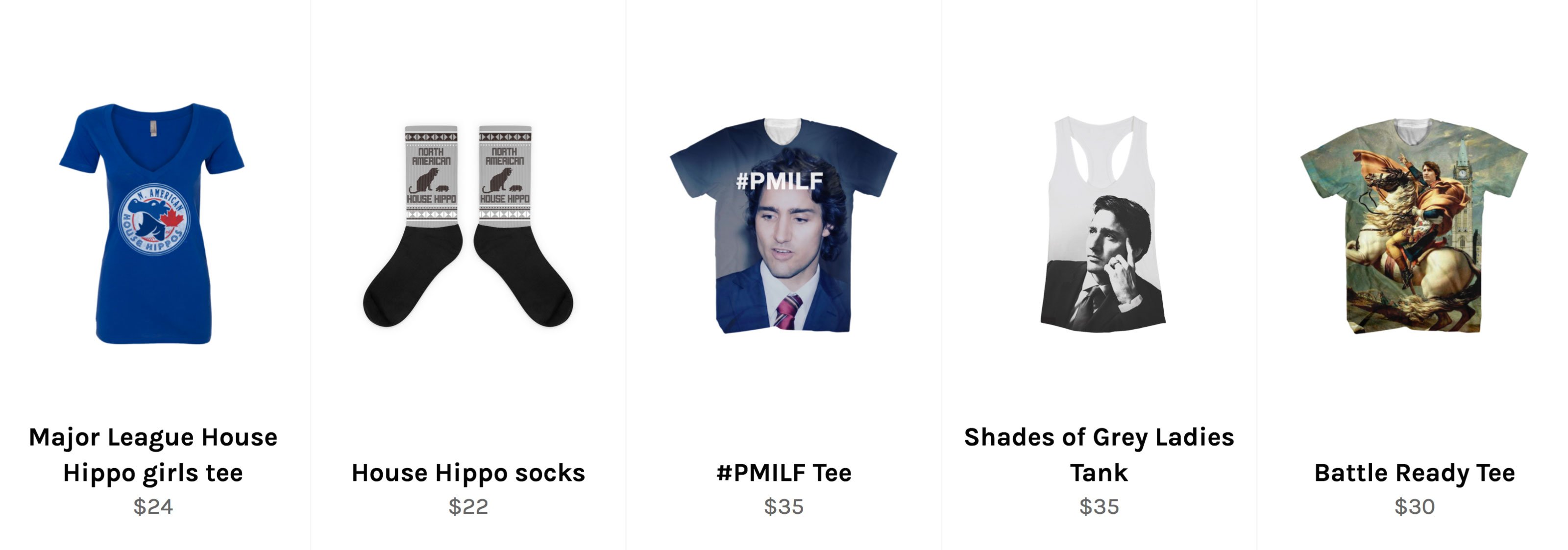
Finally, Canada Threads focuses on clothing and accessories that uniquely resonate with Canadians, including designs related to the beloved Canadian House Hippo.
Performance/Material/Quality
The type of material plays a part in differentiating your clothing pieces from the rest out there. How they perform for the wearer (are they comfortable, itchy, restricting, warm, light, airy, do they wrinkly easily, etc.) and their overall quality (including any seams, buttons, the weight of the fabric, etc.) will all play a role in your customer’s satisfaction.
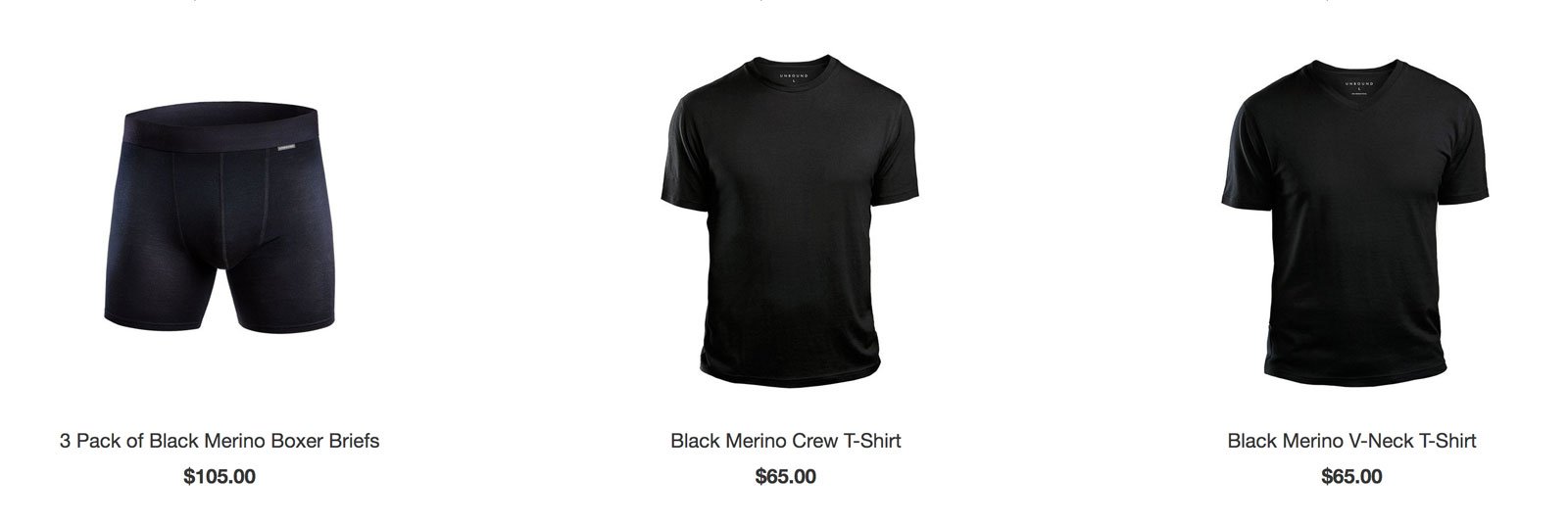
Example: Unbound Merino ran a successful crowdfunding campaign raising $300,000 and are building their brand based on the performance of their clothing: Casual wear made from 100% super-soft merino wool which has superior breathability and odor-blocking abilities, allowing this line of travel clothes to be worn many times without washing.
Developing a Business Plan for Your Clothing Line
With some of the basics out of the way, the next step is for you to develop a basic (but critical) business plan to map out your decisions and the direction for your clothing company.
Some of the major elements you’ll want to consider when putting together your ecommerce business plan are:
- Your Business Model
- Customer Personas
- Competitor Strengths & Weaknesses
- Costs & Margins
 Bonus: We recommend our exclusive One Page Ecommerce Business Plan to help you build your business plan and strategy for your clothing line. Including a full-page worksheet and a 40-page accompanying ebook, the One Page Ecommerce Business Plan is formulated to guide you through the 12 main areas of your business’ foundation so you don’t miss any important steps or overlook any important numbers.
Crafting a Brand for Your Clothing Line
The next step is to develop a brand for your new clothing company.
Crafting a brand for your new clothing company is paramount. With so many clothing companies and brands out there, you’ll need to differentiate yourself. Your brand will be a big part of that.
Ultimately, every business has a brand and every new business will have a brand. Crafting your brand upfront gives you the chance to better define and communicate your message and story.

If you’re planning on creating a custom cut and sew clothing line, you may want to consider hiring a dedicated branding agency to help you craft your brand. If you’re planning on a print-on-demand or a private label brand where your investment and budget are much smaller, developing your own brand can be a worthwhile and low-cost option.
At this stage you need to identify:
- Who your market is
- What brand would speak best to this market
Below, we will quickly introduce you to several key elements of developing your clothing company brand, however, for a complete breakdown of all brand elements, as well as the guide and worksheets to define all your brand elements, check out our branding guide, A Better Brand.
Defining Your Market
Defining your market is important for any brand, but especially for brands in the clothing and apparel market because it’s extremely saturated. By broadly targeting large groups of people, you’re setting yourself up for failure right from the beginning. What you want to do is niche down and create segments.
Some critical questions to ask yourself at this stage is:
- What type of clothing and apparel products do I want to make?
- Who is going to purchase my products?
- What specific value will my product or brand bring these people?
- What will be unique about my product?
- Who is my competition?
Creating Your Brand Pillars
Brand pillars are a few key words or attributes (usually 3-4) that embody what your brand is about, and they serve as a starting point for developing your brand persona. Later, these words are used as a checkpoint against most activities of the brand. For example, when creating your website, an advertisement, or even a conversation with your customer, you should check it against your brand pillars. Ask yourself: Does my design/website/ad/conversation represent the essence behind my brand pillar words?
Your brand pillars act as a simple tool for keeping your brand consistent throughout all of your activities and they serve as the foundation for your brand.
Develop Your Brand Visuals
Your brand visuals are the common brand elements that many people immediately think about when they think about a particular brand. This includes your company’s logo, brand colors, and fonts, as well as your overall design and photography aesthetics.
- Create a Moodboard: A mood board is a perfect way to start pulling together the visual style you’re going for. Essentially a mood board is a collection of images, photos, designs, colors, and any other snippets of multimedia you find from around the web that serves as an inspiration for your brand. While there are many tools available online to help you collect these elements, the easiest way tends to be using Pinterest or Instagram.
- Select a Color Palette: Your next step in the branding process is to narrow down a color palette to use. Selecting a color palette up front will help keep your brand looking consistent through all channels. You’ll want to start by paying particular attention to the dominant colors used in your mood board since these are likely colors that immediately caught your eye. From there we also suggest you use a tool like Adobe Color to review other community-inspired and voted color palettes to get some additional ideas. Finally, Adobe also offers a tool for helping choose and refine your color palette, check it out here.
- Craft a Logo: When it comes to crafting a logo for your business, you’ll want a logo that not only represents your brand well but one that speaks to your target demographic, too. While we always recommend working with a respected logo designer to craft the perfect logo for your brand, those with a smaller budget can get started for almost nothing with a tool like Looka.